4 Inputs Driving the Rising Cost of Rebuilding
Rebuilding after disasters, from hurricanes and floods to wildfires and tornadoes, is becoming significantly more costly across America. Which inputs are driving this trend?
This visualization, created in partnership with Inigo, provides visual context to the rising cost of rebuilding, using data from FRED.
Why Rebuilding Is Getting More Expensive
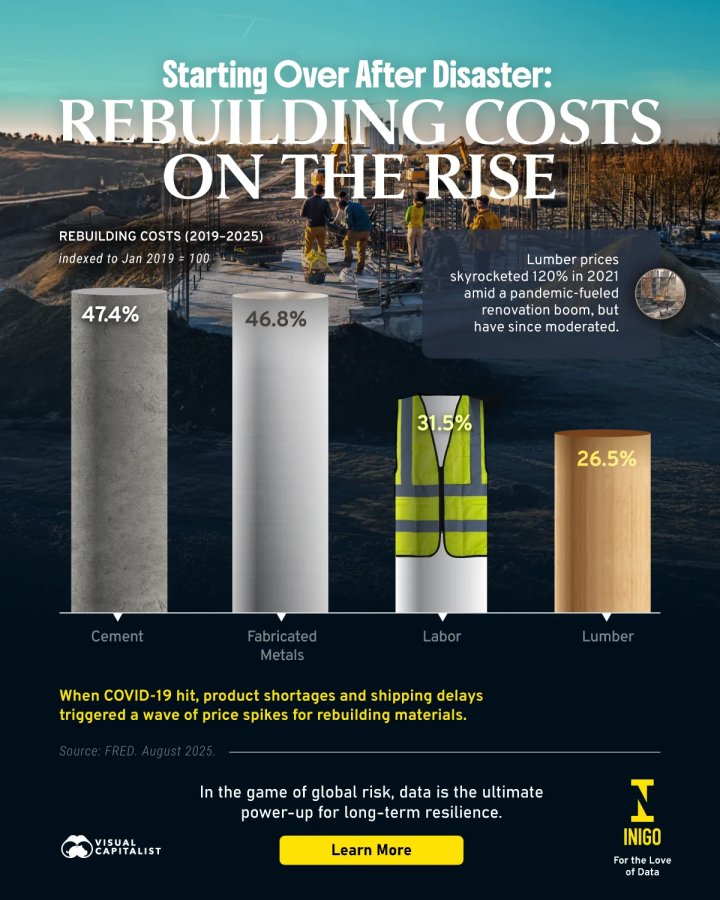
According to Federal Reserve Economic Data (FRED), prices for key construction inputs for new houses and buildings have climbed sharply since 2019. Fabricated metals are up 46.8%, cement 47.4%, and labor costs 31.5%.
| Input | Change since Jan 2019 (%) |
|---|---|
| Fabricated metals | 46.8 |
| Cement | 47.4 |
| Lumber | 26.5 |
| Labor | 31.5 |
While the pandemic initially triggered these increases through supply chain disruptions and shortages, prices have remained elevated due to sustained demand for skilled labor, climate-driven rebuilding, and ongoing geopolitical tensions.
What This Means for Property Risk
These higher costs are reshaping recovery timelines and insurance exposure. In many cases, federal requirements (such as rebuilding to current codes to qualify for FEMA funding) push costs even higher.
For property risk teams, the implication is clear: each insured dollar now rebuilds less than it did just a few years ago. That widening recovery gap amplifies the economic impact of every disaster, making accurate valuation, coverage limits, and risk pricing more critical than ever.