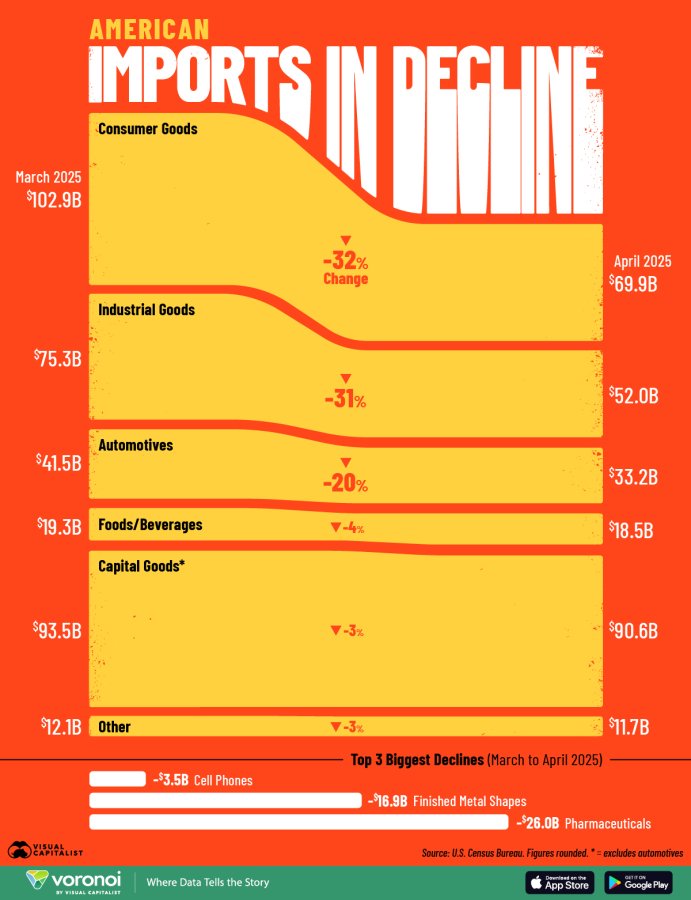
Chart: American Imports Post Record Monthly Decline
In April, U.S. goods imports dropped 20% in the largest monthly decline on record.
Overall, goods imports fell from $344.6 billion in March to $275.9 billion as Trump tariffs weighed on U.S. trade activity. So far, the cost to corporations is estimated to be $34 billion, with the consumer goods and automotive sectors hit among the hardest.
This graphic shows the decline in American imports across major categories, based on data from the U.S. Census Bureau.
The Shifting Dynamics of American Imports
Below, we show the value of U.S. imports in April by category:
| Category | March 2025 (B) | April 2025 (B) | Change (%) |
|---|---|---|---|
| Consumer goods | $102.9 | $69.9 | -32 |
| Industrial supplies and materials | $75.3 | $52.0 | -31 |
| Automotives | $41.5 | $33.2 | -20 |
| Foods, feeds, and beverages | $19.3 | $18.5 | -4 |
| Capital goods (excl automotives) | $93.5 | $90.6 | -3 |
| Other goods | $12.1 | $11.7 | -3 |
| Total | $344.6 | $275.9 | -20 |
As we can see, consumer goods imports fell to $69.9 billion, almost a third lower than in the previous month.
Pharmaceuticals played a key role in driving this decline, with imports contracting by $26 billion in April alone. Meanwhile, automotive imports tumbled by 20%, with notable drops from Canada.
While the U.S. trade deficit hit all-time highs in March ahead of Trump’s anticipated tariffs, it contracted by 55% in April to reach levels seen in September 2023. Yet whether or not this trend continues is an open question. As Trump paused tariffs on China and reached bilateral trade agreements, imports could gradually tick up once again.
However, uncertainty remains piqued among corporate America—with several firms including Apple and Ford drastically cutting profit outlooks due to shifting barriers to trade.