Who Controls the World’s Diesel Exports?
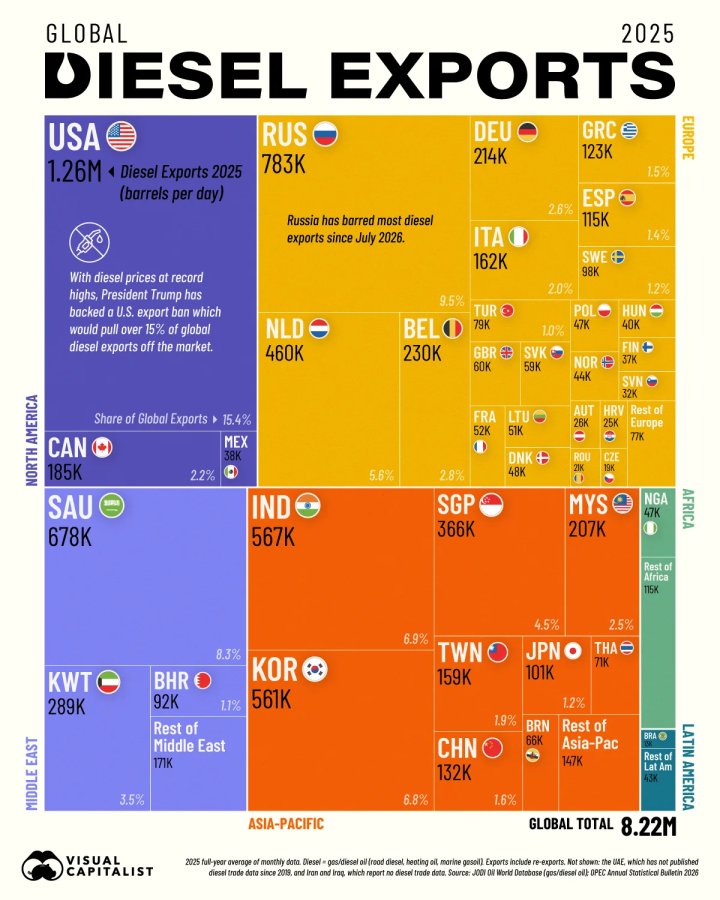
The Countries Behind Global Diesel Supply
Diesel powers the trucks, farm equipment, and ships that keep goods moving, making its availability a concern far beyond the fuel pump.
The Countries Behind Global Diesel Supply
Diesel powers the trucks, farm equipment, and ships that keep goods moving, making its availability a concern far beyond the fuel pump.
Who Trades the Most Within BRICS?
BRICS now has 11 members: Brazil, Russia, India, China, Saudi Arabia, South Africa, Egypt, Ethiopia, Indonesia, Iran, and the UAE. Together, they span several regions and have very different export profiles.
This graphic, created by Iswardi Ishak, visualizes 2025 goods exports between 10 BRICS members using data from the International Trade Centre.
Each cell shows exports from one member to another, rather than total two-way trade between the two countries. Saudi Arabia is not included in the matrix shown.
How Work-Life Balance Varies Across the U.S.
Where Americans live can shape how much they earn, how much time they spend working, and the protections available when they need time away from work.
This map compares all 50 states using Remote’s 2025 Life-Work Balance Index, which considers factors including average working hours, happiness, inclusivity, minimum wages, statutory leave, and public safety.
Which States Score Highest for Work-Life Balance?
How Student Debt Varies Across the U.S.
Student debt can follow borrowers long after graduation, with balances shaped by factors ranging from education levels to where borrowers live.
This map shows average federal student loan debt per borrower using Federal Student Aid figures as of March 2026, compiled via the Education Data Initiative. Balances include principal and interest but exclude private student loans.
Where Student Loan Balances Are Highest
Who Leads the Global Fertilizer Trade?
The global food supply depends on a fertilizer trade concentrated among a relatively small group of countries.
Farmers use fertilizers to replenish nutrients and support crop growth. Producing them at scale depends heavily on access to key mineral deposits and energy resources.